A History Of Batman and The Scarecrow, Part 2: Scarecrow In Batman Animation
Animation has proven essential in defining Scarecrow’s characters and the kinds of stories he stars in, but what do these episodes say about Jonathan Crane?

Welcome to a three part essay series tracking the evolution of the villainous Scarecrow across Batman media. You can read Part 1, about Scarecrow’s history in Batman comics, here. In this part, we’ll be looking at his character and costume evolution in Batman cartoons.
It’d be a mistake to track Scarecrow’s development only through the comics when Batman has been a multimedia saga for decades. Scarecrow’s very first appearance in animation was an episode of the forgettable Batman/Superman Hour series. Voiced by (like most of the series’ villains) by Ted Knight, he boasted a plain white mask that may have been intended to resemble a ghost or ghoul, but instead looked clownish. He next appeared on Challenge of the Superfriends as part of the 13-villain strong Legion of Doom. Scarecrow rarely did much in this series, but sitting in this company helped his reputation as one of DC’s A-List villains.
His next Super Friends appearance would be more consequential. The Super Powers Team: Galactic Guardians writer Alan Burnett, a lifelong Batman fan, was pursuing a darker Batman series, even writing a pilot script. When that didn’t pan out, he used the pilot script as basis for a Super Powers Team episode: “The Fear.”
Aired in 1985, “The Fear” was the first time depicting Batman’s origin on television, and correspondingly shows Batman more vulnerable than ever before. Stumbling into Crime Alley one night, he recalls his parents’ murder and freezes up — he even appears to cry, his tears hidden by the rain. The natural villain for such a tale, that’s all about reaching into Batman’s psyche for his life’s defining fear, and reminding him he became Batman as a way to overcome it? The Scarecrow (Andre Stojka), of course, who uses the skull-shaped fear transmitters from Batman #373 and employs his Straw Men henchmen. “The Fear,” starring Adam West as Batman, feels like ‘60s show Scarecrow episode we never got.
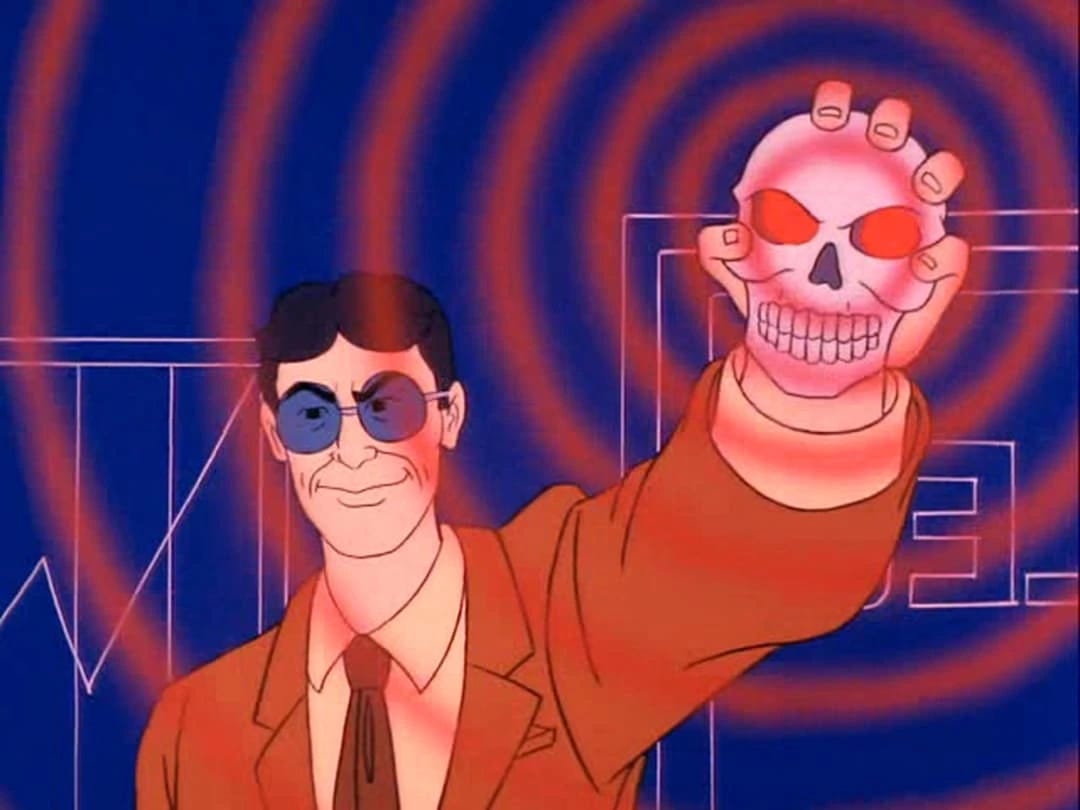
Burnett would later become producer and story editor on Batman: The Animated Series. “The Fear” stands as that series’ unofficial pilot, for it finally delivered the darker Batman cartoon he’d envisioned when he wrote “The Fear.” That episode also set the template for Scarecrow episodes on The Animated Series, where he functions to poke fear and psychological torment inside of Batman.
There’s a few basic formulas for a single issue/episode Scarecrow story. His appearances on Batman: The Animated Series deploy them and suggest the writers buckled up against finding for more him outside them.
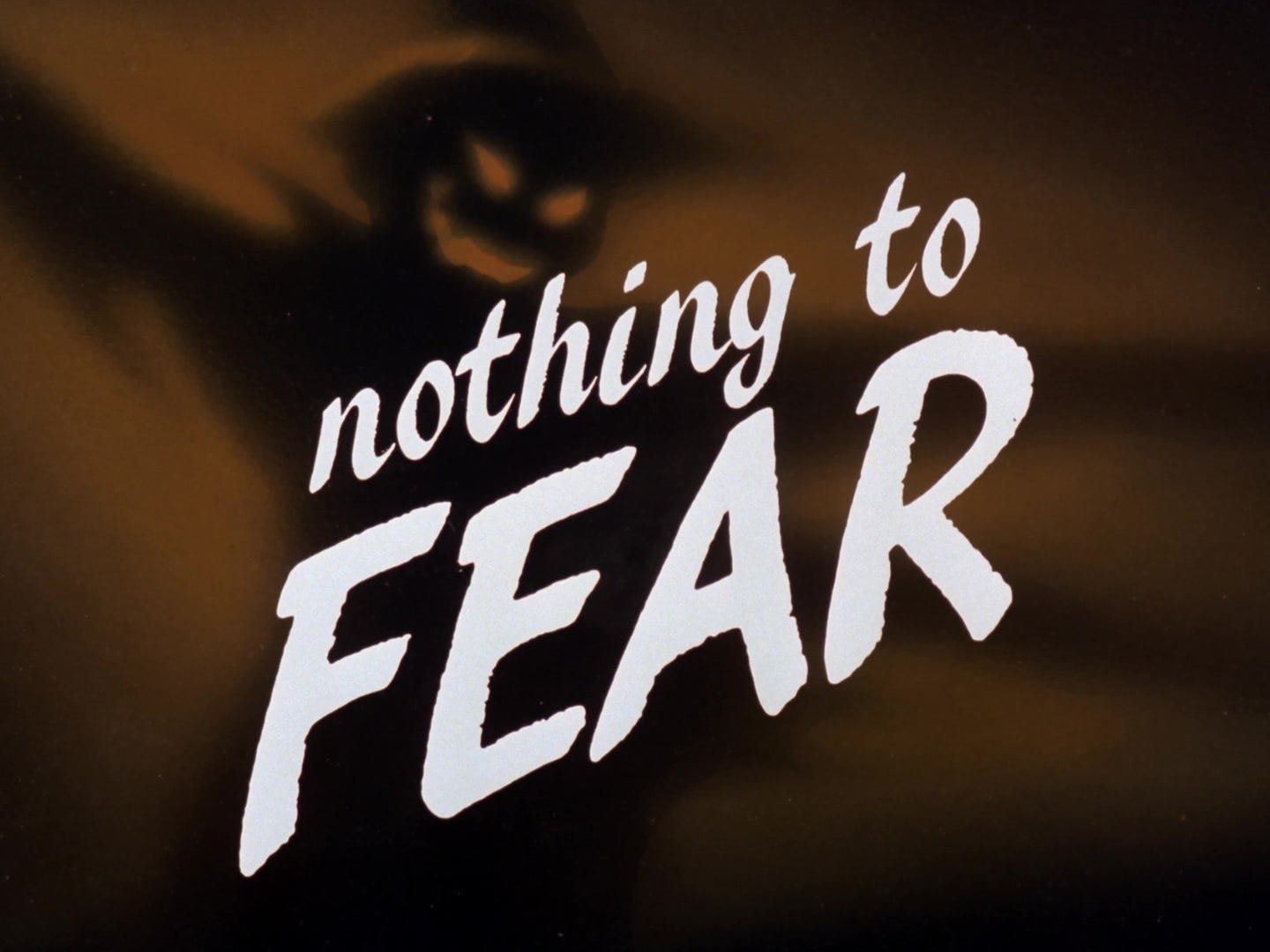
Scarecrow’s (Henry Polic II) debut in “Nothing to Fear” is the “Scarecrow brings out Batman’s fears” story. As Batman (Kevin Conroy) tries to stop a vengeance-seeking Scarecrow from burning down Gotham University, he’s plagued by fear toxin hallucinations of his father calling him a disappointment. That poisoning delivers unto us Batman’s most famous line ever, shouted to silence his own doubtful subsconscious: “I am vengeance! I am the night! I am Batman!” Scarecrow is a haughty and arrogant villain, seeing small minds everywhere he looks, and experiences a karmic defeat: exposed to his own toxin, he imagines Batman as a giant bat monster.
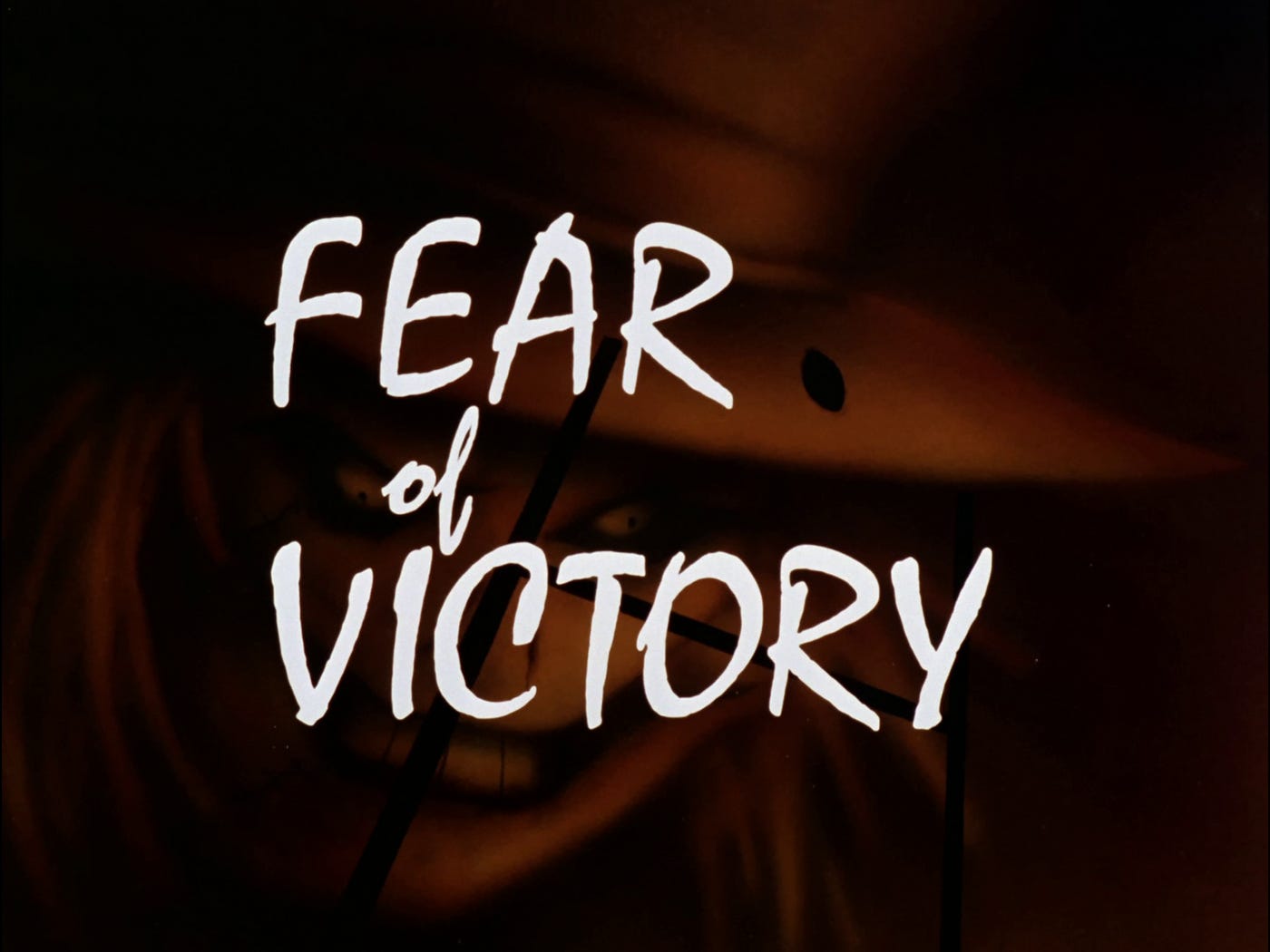
Then we have “Fear of Victory,” where Scarecrow gambles on sports and fixes the outcomes in his favor by poisoning top athletes with a fear toxin that spikes if mixed with adrenaline. This is the “Scarecrow uses fear for profit” story, or the original kind of Scarecrow story, the one first told back in 1941. This time it’s Robin (Loren Lester) dosed with the fear toxin, but the fear Dick has to overcome is rather general, without much deeper gleaned from his character. Scarecrow’s scheme is also the slightest one he pulls in the series; he admits to Batman he’s after a quick buck because he needs it for funding his other fear-related crimes and experiments: “You know the cost of chemicals these days.”
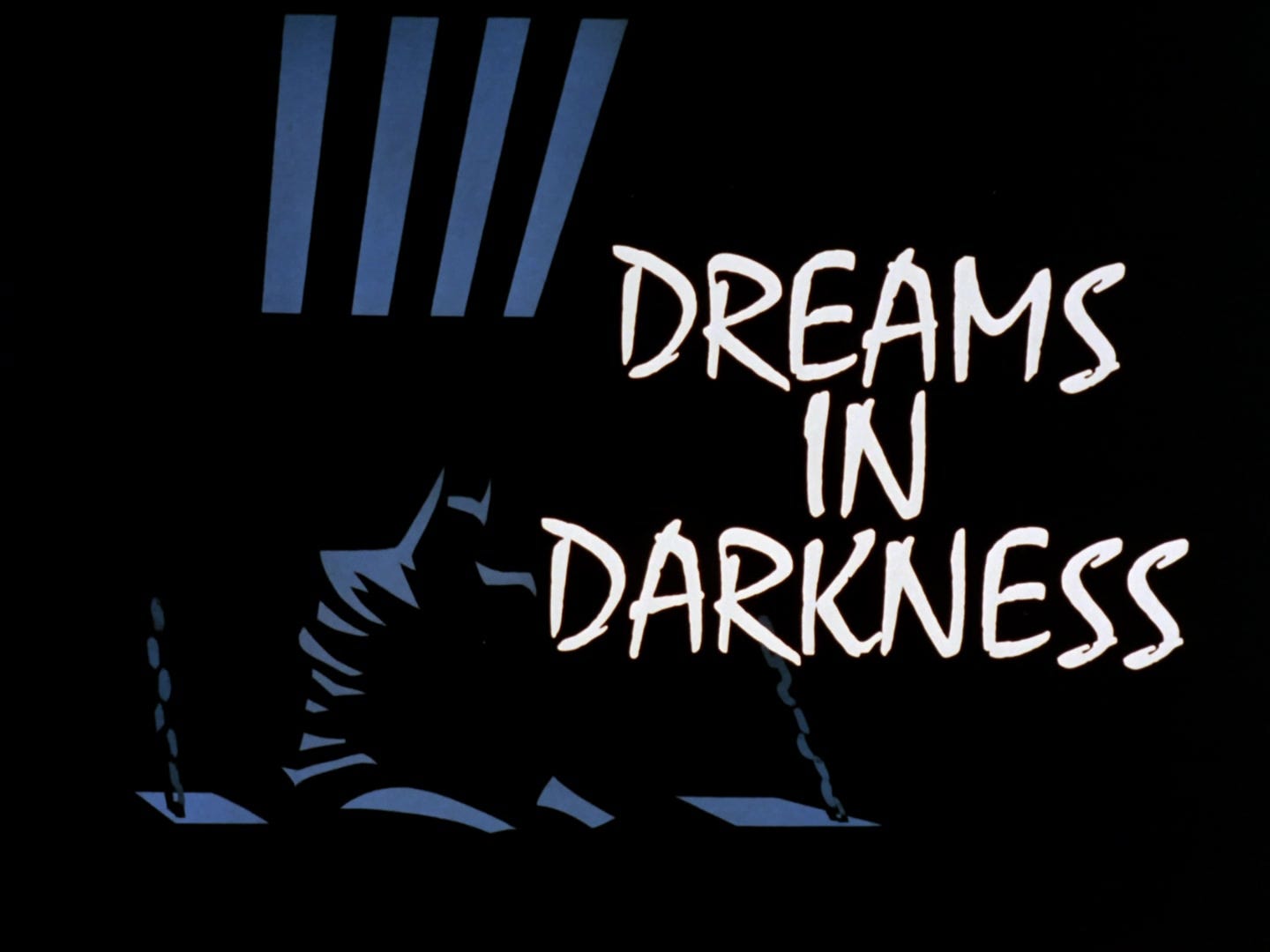
Scarecrow’s academic side resurfaces in his third episode as big bad: “Dreams of Darkness,” where he plots to use the river beneath Arkham Asylum to send a wave of fear toxin through Gotham. Calling his plot “the greatest controlled experiment in mass madness” ever conducted, this is the only time Scarecrow enacts primarily because he wants to study fear the way he once did as a professor. This is the “Scarecrow is going to poison all of Gotham with fear” story, reused in much greater scale stories like Batman Begins and Batman: Arkham Knight. During “Dreams in Darkness,” Batman is once more poisoned with Scarecrow’s fear toxin (and here you can conclude why Scarecrow fell off as a main villain after this — there’s only so many times you can keep that story fresh). But this time, the hallucinations are much more aggressive and detailed. Entire sequences are devoted to Batman fighting off the worst and most surreal terrors his mind can conjure. There’s a greater external obstacle this time, too, because Batman — seemingly gone mad — has been locked in Arkham Asylum himself.
Returning after this only for cameos, Scarecrow got another shot at main villain when the series relaunched as The New Batman Adventures. “Never Fear,” featuring a recast Jeffrey Combs as Scarecrow, is a mix of all three formulas, not to mention a loose adaptation of “Fear for $ale.” Scarecrow’s new drug takes away people’s fear. He wants test patients, but he wants to make a profit too, and he intends to by blackmailing Gotham for the antidote. Batman, once more, is exposed to the Scarecrow’s poison but, naturally, the effects are completely different this time.
In “Fear for $ale,” the tension is whether the drugged Batman will be able to rescue Robin or if, without his fear, he’ll carelessly get himself killed walking into one of Scarecrow’s traps. “Never Fear” goes for something darker. This new, “fearless” Batman — without the fear of consequences that keep him from killing criminals — is indifferent to human life. Robin (Mathew Valencia) has to keep him from throttling Scarecrow. That lets Robin get time in the spotlight and better proves the episode’s moral lesson that, as Scarecrow says, “fear is the glue that holds society together.”
Scarecrow’s second and final appearance in New Batman Adventures, “Over The Edge,” is the scariest he’s ever been and the purest distillation of his role in the show. Crane seemingly murders Batgirl (Tara Strong), pushing her to death when he slams her off a skyscraper with his wooden stick. The dialogue-free sequence, from Batgirl turning around in horror to see Scarecrow about to strike her from the shadows to Batgirl’s plummeting body landing on the hood of Commissioner Gordon’s (Bob Hastings) car? Incredible. But, unsurprisingly, the whole episode is a fear toxin dream from Scarecrow gassing Batgirl. He’s scary, but he disappears after act 1. No reason is given for the scheme Scarecrow was enacting during this, and he doesn’t even have any real dialogue! In Batman: The Animated Series, Scarecrow was a villain there to spur conflict among and within the heroes.
Since Batman: Caped Crusader is another work of Bruce Timm — and features his same distinctive art style — I’m going to lump it in here even though it’s not the same canon as Batman: The Animated Series. “Sudden Fear” features the same disinterest in what makes Scarecrow tick.
Going back to the university setting of Scarecrow’s origin, someone is scaring Gotham U students to death. Batman (Hamish Linklater) teams up with Harley Quinn (Jamie Chung) to investigate and profile the killer; the episode is clearly more drawn to that partnership than its villain. This Scarecrow doesn’t live up to his name; though the crow mask is a nice touch, the black business suit is utterly generic. There’s a twist when Jonathan Crane is a student, not a professor — a provocative choice in an age where headlines about school shootings never vanish — but the episode doesn’t even scratch the surface of why Crane is doing this. We even get the exact same ending as “Nothing to Fear” — Batman overcomes the fear toxin, Scarecrow’s own toxin poisons him, he sees Batman as a giant bat demon, and faints in fear. Thirty-four years later and still fundamentally the same Scarecrow story.
Batman: The Animated Series is famous for making almost all its villains tragic or sympathetic in their own way. Paul Dini’s “Heart of Ice” most famously turned Mr. Freeze from a corny C-lister into a broken man, but even other villains like the Riddler (who got rewarded with being fired after making his boss rich) and the Mad Hatter (a lonely man who let his crush get out of hand) get more sympathetic renditions. No such episode for Scarecrow; “Nothing to Fear” shows how, even since childhood, he’s delighted scaring people, suggesting Crane was always a bad egg. Why else would he dedicate his life to fear?
Indeed, the innate sadism of Scarecrow’s motif and fear obsession runs counter to making him sympathetic. Other angles have never taken off as wholly his. Scarecrow often explicitly commits crimes to fund his experiments — that right there is an opening for commentary on the dire state of the U.S. education system, but most Batman stories use Crane’s college professor background as only a vengeance motive. As mentioned in Part 1, Doug Moench’s 1995 “Masters of Fear” comic in Batman Annual #19 made Scarecrow a victim of childhood bullying.
Year One: Batman/Scarecrow by Bruce Jones and Sean Murphy adds onto the childhood torment, depicting a young Crane raised by his abusive religiously fanatic great-grandmother (which only adds to the Carrie vibes of Moench’s bloodbath prom origin ). She even doused his clothes in rat blood to make birds attack him, obviously inspiring Crane’s later method of literally spraying fear onto people. But while being bullied at school and home fits Crane’s character — it naturally explains why he’s obsessed with fear and making sure he’s the one who spreads it — it’s also a pretty old hat super-villain origin.
Only one story has truly cracked a sympathetic Scarecrow and it’s by making him a lesser evil. The Batman Adventures Annual #1 over-sized issue includes a Scarecrow story, “Study Hall,” drawn by Klaus Janson and scripted by Paul Dini, renowned for his sympathetic villain scripts on The Animated Series. “Study Hall” gives Scarecrow that sort of Dini-story that he never got on the real show, but once you know its content, you’ll see why.
In “Study Hall,” Crane escapes Arkham, tries to go back to being a professor under an assumed name, Irving Diedrich (as in Irving Berling, author of The Legend of Sleepy Hollow). Then his favorite student, Molly Randall, is raped by a man named Bromley (as in Ichabod Crane’s rival Brom Bones). Crane kidnaps Bromley as the Scarecrow and subjects him to fear toxin to avenge Molly, specifically noting that he must’ve enjoyed making a girl feel powerless. The lines of hero and villain are especially thin here, because Crane is basically doing what Batman would do — making someone who terrorizes others feel afraid. But, of course, Scarecrow goes further than Batman would, toying with Bromley like he’s pulling the legs off a trapped spider one-by-one. Batman stops Scarecrow, but can’t totally condemn him in his inner monologue: Unlike Bromley, Batman thinks, “Crane has always had the decency to wear his mask on the outside.”
I see a strong overlap with Study Hall and Peter Milligan & Duncan Fegredo’s 1997 story “Mistress of Fear,” where Scarecrow tries to recruit college student Becky Albright as his sidekick. Crane sees fear as power because he’s been bullied or disrespected his whole life. In these stories, he’s not just spreading fear for study and fun, he wants to empower or avenge people he recognizes as afraid like he was once.
Getting the right Scarecrow look
I’ve always loved Scarecrow’s design, even if it’s exactly what you’d expect from his name. (I’ll always be a tad disappointed the Nolan movies only went as far as his burlap sack mask.) If Jonathan Crane is “the Master of Fear,” then he has to look the part, for visual stimuli is one of the easiest ways to spark terror. Only, his original look wasn’t the scariest. Through the Golden and Silver Ages of comics, his mask had no eyes, making him look as if he was wearing a bag over his head. Come Detective Comics #571, Alan Davis gave Scarecrow’s mask eyes and a stitched mouth, making him look much more ghoulish.
Batman: The Animated Series admittedly struggled with his design; Scarecrow is the only major villain whose look was overhauled even before The New Batman Adventures. In his first appearance, Scarecrow wore a plain burlap bag over his head, white pupil-less white eyes and no teeth.
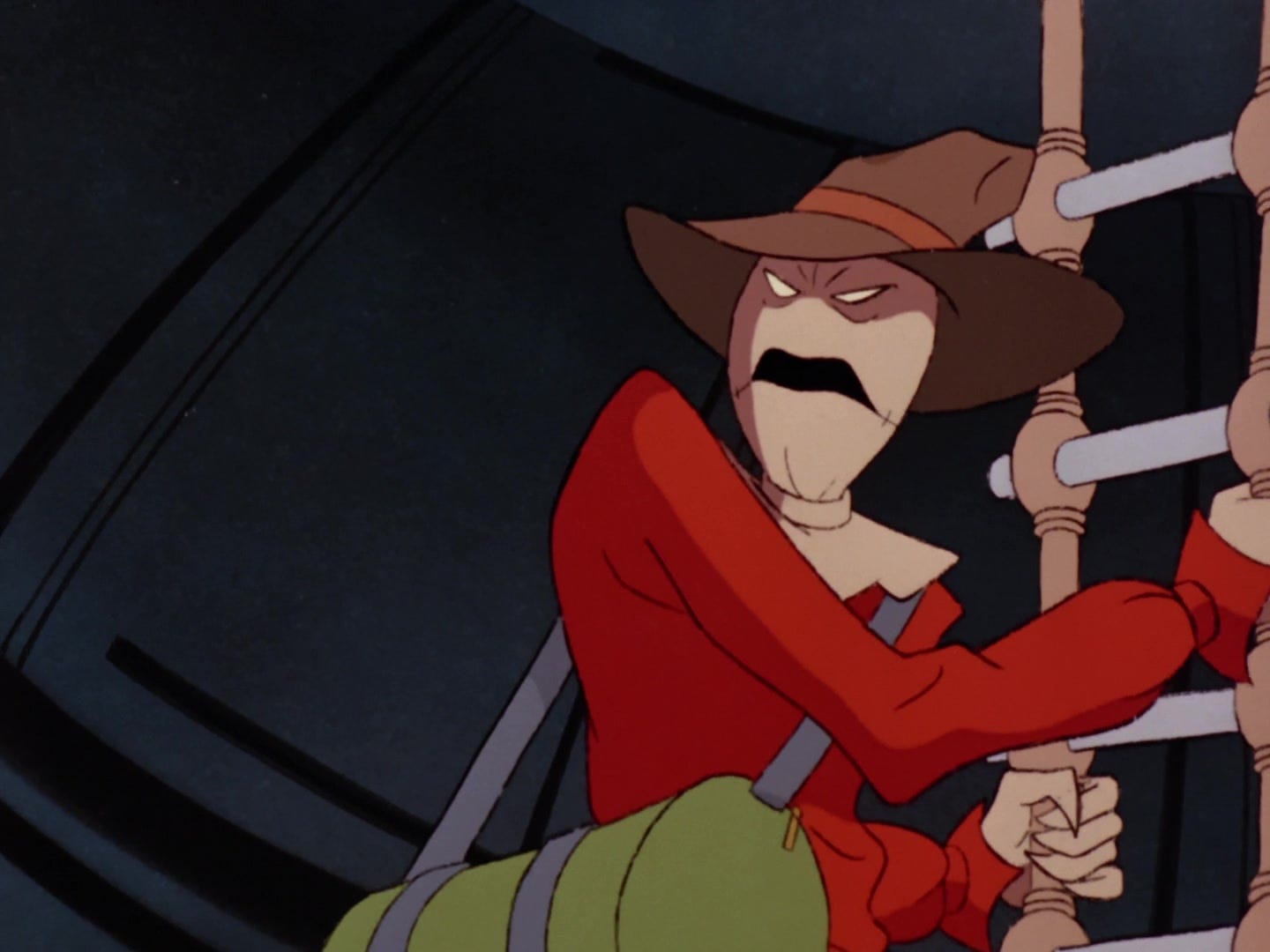
It simply wasn’t especially scary, the mask especially looking like a miniature Halloween decoration of a ghost you’d hang on your front porch. Come “Fear of Victory,” Scarecrow’s mask looks more haggared, with straw hair, a crooked jaw and teeth, and bigger, more piercing eyes — with small white, black-pupiled eyes surrounded by triangular eye holes, Crane looked almost like he was wearing a jack-o’-lantern over his face. “Fear of Victory” even keeps Scarecrow in the shadows or masked until the second act commercial break, only revealing his new look when Crane corners a poor soul (a genuinely unsettling sequence, though one that’d be stronger without the typical cartoon censorship confirming Scarecrow only terrified the guy, not murdered him).
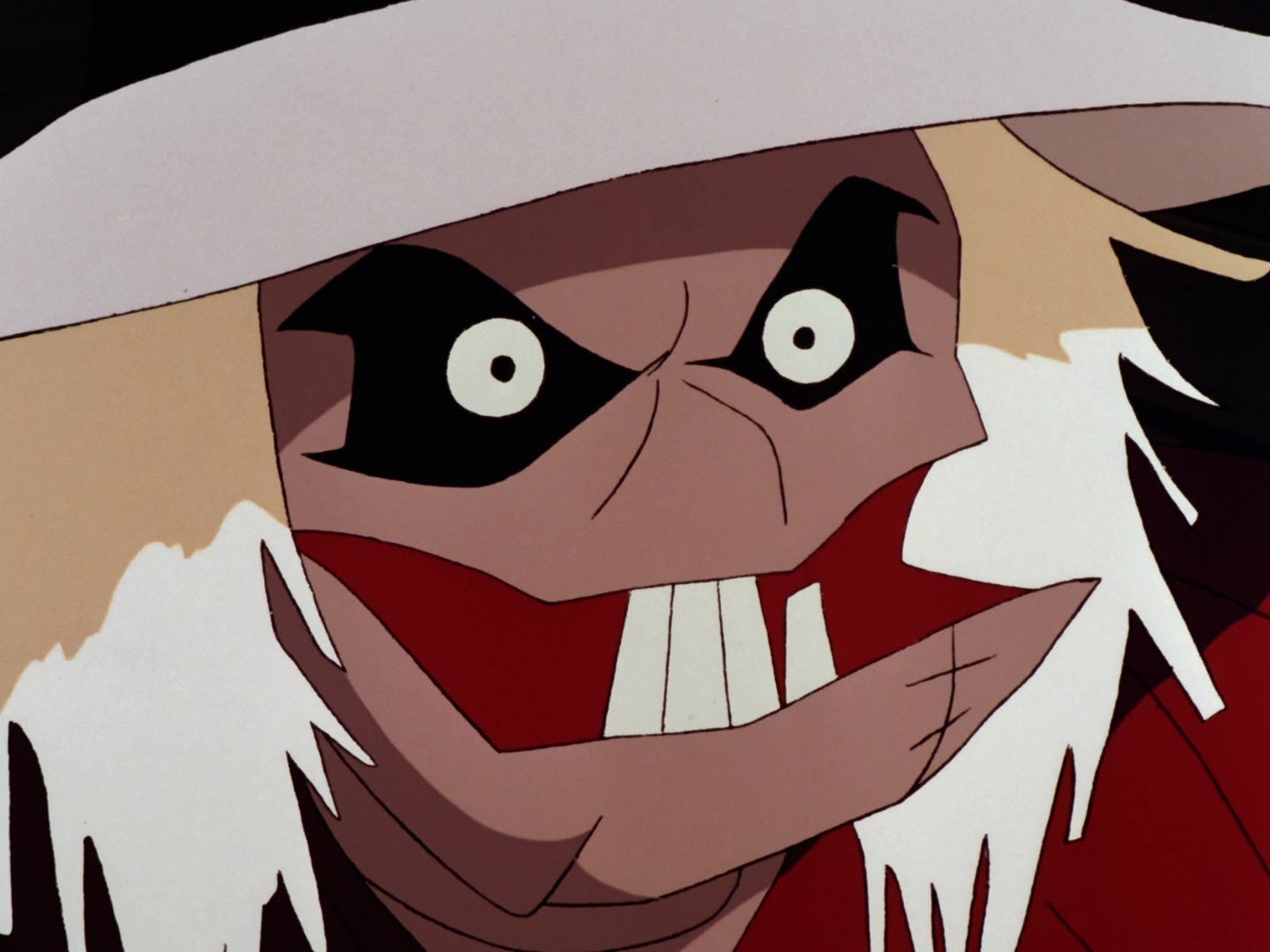
Still, the Batman team wasn’t satisfied. “The Scarecrow should be kind of scary, and no matter what you do with it, a guy with a jack-o-lantern face and scarecrow clothes is not scary,” said Bruce Timm. So on New Batman Adventures when the chance came to redesign Scarecrow yet again, Timm decided to focus on making the character scary instead of being completely faithful to the “scarecrow” motif. The results were widely praised.
The comparison I’ll always use for New Batman Adventures Scarecrow is he looks like Robert Mitchum as southern preacher/serial killer Harry Powell in The Night of the Hunter, only undead. Crane’s mask looks less like cloth and more like unrefined leather made of raw animal flesh, with screwbolt eyes making him appear extra soulless. Then there’s the morbid touch of a severed noose hanging around his neck. (“He looked like a hanged man who had been cut down and gone off to terrorize people,” Dini said.)
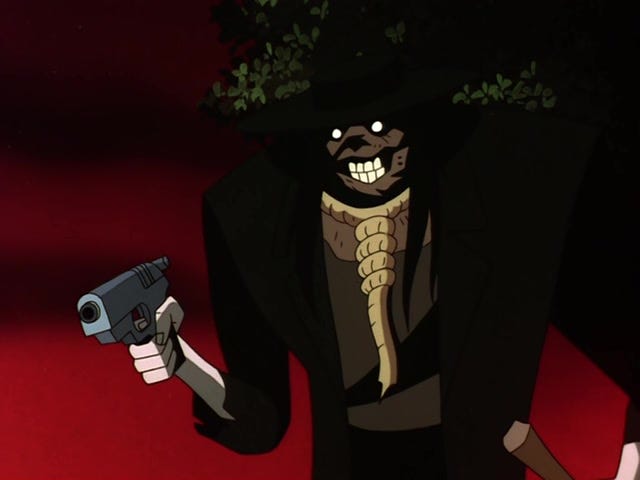
The noose was such a good touch that it would continue to appear on later Scarecrow looks, like Batman Begins and the Batman: Arkham Asylum video game. Arkham Asylum featured the next great addition to Scarecrow’s look; to make him extra nightmarish, he wears Freddy Krueger-glove but with syringes. That’s definitely a more tactile and terrifying weapon than spraying gas. The comics would later bring Scarecrow’s syringe glove in, coupled with a new mask that resembled less a Scarecrow than a beaked plague doctor mask.
Circling back to Absolute Batman, Dragotta’s Scarecrow is the scariest since The New Batman Adventures. Dressed in a brown suit and tan pants like a 1920s gentleman, this Scarecrow looks almost normal — until you see his face, with button-doll eyes and stitching in between his lips. Like the New Batman Adventures design, you’re left unsure if that is a mask or simply Crane’s face. He doesn’t wear a noose, but he still looks like something that dead that could’ve crawled out of the ground. The Absolute Scarecrow ditches the syringe glove for a much more subtle weapon: a cigarette, for he simply exhales and blows his fear toxin into people’s faces. With an inexplicable ability to appear and disappear at will and apparently supernatural control over crows, this Scarecrow finally feels like a villain that would terrify Batman — especially a young Batman without the same resources as usual — more than a typical thorn in his side.
To be continued in Part 3, where we’ll conclude looking at what makes Absolute Batman’s Scarecrow unique.
Discussion about this post